
HumanLike: The Chimps of Fongoli
Season 45 Episode 4 | 53m 30sVideo has Audio Description
The chimpanzees in Fongoli have adapted humanlike behaviors to survive their environment.
See how the chimpanzees in Fongoli, Senegal have adapted humanlike behaviors to survive their extreme Saharan environment. A 25-year study uncovers chimps hunting with spears, sheltering in caves, digging wells and reading fire.
See all videos with Audio DescriptionADProblems playing video? | Closed Captioning Feedback
Problems playing video? | Closed Captioning Feedback
Major support for NATURE is provided by The Arnhold Family in memory of Henry and Clarisse Arnhold, Sue and Edgar Wachenheim III, Sarah and Sandra Lyu in memory of Seung...
HumanLike: The Chimps of Fongoli
Season 45 Episode 4 | 53m 30sVideo has Audio Description
See how the chimpanzees in Fongoli, Senegal have adapted humanlike behaviors to survive their extreme Saharan environment. A 25-year study uncovers chimps hunting with spears, sheltering in caves, digging wells and reading fire.
See all videos with Audio DescriptionADProblems playing video? | Closed Captioning Feedback
Where to Watch Nature
Nature is available to stream on pbs.org and the PBS app.
Buy Now
Explore More Ways to Watch
Bring the beauty and wonders of wildlife and natural history into your home with classic NATURE episodes.Providing Support for PBS.org
Learn Moreabout PBS online sponsorship♪♪ -South of the Sahara Desert... is a group of remarkable chimpanzees.
[ Grunting ] They may hold clues to how we became human.
♪♪ [ Grunting ] People said getting close to them was impossible.
Then one team changes everything.
Let into their secret lives, they witness new behaviors... ...opening a window into our own deep past.
The chimps of Fongoli are more like us than anyone ever imagined.
♪♪ (upbeat music) ♪ Ah, hey ♪ (upbeat music continues) -Senegal is so hot and dry... it's at the limit of where chimpanzees can survive.
♪♪ And, yet, it's home to a special group whose lives may hold clues to our own evolutionary past.
♪♪ But getting close to them is almost impossible.
They're elusive ghosts, rarely seen.
♪♪ The story of how we came to discover their secrets starts 25 years ago... not in the wild, but in town... [ Horn honks ] ...with a man who, back then, knew nothing about chimpanzees.
-[ Speaks indistinctly ] [ Bleating ] ♪♪ -Everything changed for Johnny the day he met a scientist from America.
♪♪ Jill Pruetz knew Johnny had grown up on the edge of the bush and she wanted his help to study the special chimpanzees up close.
Trouble is, the chimps are so elusive, people questioned whether they even existed.
They asked me what I was doing, and I said, "I'm studying chimpanzees."
And they told me, "There are no chimpanzees in Senegal."
-Yeah, exactly.
-Johnny knew if he was going to accept this challenge, it was going to be a massive task.
-Mmm!
That's good.
-Yeah, yeah.
♪♪ -Johnny's mission was to go into the Fongoli region of the savanna and somehow get the chimpanzees accustomed to his presence... to habituate them.
♪♪ But coming back to his childhood stomping ground means facing his childhood fears, because when Johnny grew up, chimps were things to be scared of, dark spirits parents told their children to avoid.
♪♪ ♪♪ ♪♪ The scale of Johnny's task is huge.
Other chimps live in lush forests, where food and water is abundant, but this is one of the driest areas of Africa.
Here, resources are scarce, and the Fongoli chimps must roam a much larger territory than their forest cousins.
It's a vast area for Johnny to search.
And to make it more difficult still, the chimps are extremely wary of people.
♪♪ For four long, hot years, Johnny heads out with a small team.
Gradually, he gets the chimps used to him and begins to learn where they like to go.
But every time he gets close... they still run away.
♪♪ ♪♪ [ Birds chirping ] Then, one day, while Johnny searches for the chimps at a small waterhole, something special happens.
[ Buzzing ] [ Buzzing ] ♪♪ ♪♪ Instead of running away, one particularly bold male stares right at him.
♪♪ It's a breakthrough moment.
Finally, the chimps let Johnny in.
♪♪ [ Squawking, screeching ] ♪♪ It's the beginning of an extraordinary relationship that allows Johnny and the team to see into the intimate lives of these savanna chimps.
[ Screeching ] [ Howling ] [ Grunting ] [ Thunder crashes, rumbles ] In this part of Senegal, rain is scarce.
Incredibly, this could be the last downpour in the Fongoli region for eight months.
[ Birds chirping ] [ Chimpanzee grunting ] For the group, this pool is possibly their last chance for a decent drink.
The water provides a welcome oasis.
But when it comes to leaving... they're a little unsure about walking through it.
[ Grunting ] ♪♪ ♪♪ ♪♪ ♪♪ ♪♪ [ Grunting ] ♪♪ ♪♪ The group now known as the Fongoli Chimps numbers about 30 individuals.
And as Johnny and the team get to know them, they begin to give them all names.
Like Tia, a caring mother... and males like gentle Mike... ...and Lex.
♪♪ ♪♪ ♪♪ -[ Laughs ] [ Chattering ] ♪♪ ♪♪ [ Screeching ] ♪♪ [ Birds chirping ] -Each day, Johnny tracks the family, noting down everything he sees.
One of the big questions was, how are the chimps surviving out here, where food seems so scarce?
17-year-old Cy is the alpha male.
The bravest of the males, he's been the group's leader and protector for three years... and he bears the scars to prove it.
Under Cy's leadership, the chimps must cover many miles in their constant hunt for food.
[ Grunting ] Even this parched ground has treasures, if you know where to look.
♪♪ ♪♪ ♪♪ ♪♪ ♪♪ ♪♪ ♪♪ ♪♪ Getting into the fruit isn't always so easy.
♪♪ -[ Laughs ] ♪♪ -To break the toughest shells, they worked out how to use stones as anvils... just like Johnny used to do as a kid.
-Aww!
♪♪ ♪♪ ♪♪ ♪♪ Habituating the Fongoli chimps is the key to understanding them.
After spending so many years just to get the chimps to accept their presence, Jill's team can now record, in detail, everything they do.
-Once you habituate the chimps, then a whole nother world comes through.
You could follow them, you know individuals, and you could watch them feed and interact socially, and it was all worth it.
-Baobab trees like this are islands of food in a parched savanna.
[ Grunting ] But searching for the next opportunity means crossing vast areas of open ground.
♪♪ Out here, they're exposed and vulnerable.
♪♪ Adult males, like Mike and Lex, are on high alert.
[ Screeching ] The sound of another chimp group puts them on edge.
[ Screeching continues ] Standing up gives them a better view over the tall savanna grass.
For Jill, it's this kind of behavior that makes the Fongoli chimps so intriguing and so like us.
She thinks they can give us clues into the evolutionary forces that shaped our own deep past.
-What caused us to become human is one of the big questions, and this type of environment is very similar to what our first bipedal ancestors lived in six or seven million years ago.
♪♪ ♪♪ -And sure enough, Jill's research is showing these chimps are walking on two legs more than any forest chimps... ♪♪ ...just like our ancestors did.
♪♪ ♪♪ ♪♪ ♪♪ Every step of the way, the research team are seeing the chimps here are different from other chimps.
But nothing prepared them for what happens at night.
Chimpanzees almost never come out after dark... or so we thought.
Using the light of the full moon, the chimps are leaving their nests to feed.
[ Twigs snapping ] ♪♪ Like early humans, they're expanding their daily life into the nighttime.
Overcoming their instincts, they're avoiding the stress of the savanna heat.
Discoveries like this spur the team on.
And over the years, Jill, like Johnny, becomes even more enamored with them.
-You're with them so much, they really become like friends or family.
We kind of have our different favorites.
It really is like a soap opera.
-But getting this close to the chimps makes tragedy harder to bear.
[ Horn honks ] ♪♪ [ Engine starts ] Johnny was worried this could be one of his Fongoli chimps.
♪♪ ♪♪ Johnny convinces the boy to hand over the chimp... and then gets straight on the phone to Jill.
-He said, "Some men have a baby chimp, and I think she's from our group."
-Jill believed they could return the baby to the mother.
But if the other chimps saw them carrying the missing baby... they might attack.
So they put the baby in a sack... and took her close to the troupe.
-I had a camcorder.
I filmed the whole thing.
We hoped the chimps would hear her calling.
But the thing is, she never called.
♪♪ -Then one of the males became curious.
It was Mike.
-He saw the baby.
He kind of stands up.
[ Screeching ] The baby gives a little scream, and immediately, like, he grabs her and she grabs him.
And he carried her right back to the tree.
♪♪ And he gave Tia the baby back.
It was just, like, amazing.
♪♪ -Tia's baby, Aimee, was reunited with her mother.
♪♪ -Giving the baby back to her mother, it was just so satisfying.
Probably a highlight of my life.
-It was such a big moment for Jill, she commemorated it permanently.
-It takes up my whole arm.
And, so, that took me about 20 hours to get and five different sittings.
Yeah, yeah, it really impacted me.
-But when the group moves on, Tia's problems continue.
She was injured.
-Tia couldn't keep up with the rest of the group.
She would put the baby down and then rest for a little while, pick the baby up, walk some more.
And then, finally, Mike just picked the baby up and then carried her the rest of the way to the nest site... and then handed her back to her mother.
-It was a rare recording of selfless behavior in a young male chimp.
For Jill, it's evidence that chimps have emotions like humans.
-Mike had empathy, like humans have empathy.
♪♪ -Chimpanzees have famously shown us things that we thought only humans did.
Most famously, we used to think that we were the only ones to use tools.
But that changed back in the 1960s.
♪♪ When primatologist Jane Goodall first saw forest chimps using sticks to fish for termites, it fundamentally changed our understanding of what it means to be human.
♪♪ Now Johnny's finding that the Fongoli group is continuing to push at the limits of those expectations.
His chimps are tool-using experts.
All the generations are at it.
But Nickel's kids are finding it takes some practice.
But it's not just about technique.
It's about finding the right spot.
♪♪ And if you're a youngster, like Zeb, you need to fish fast.
Out here, there's a pecking order.
♪♪ The research has now shown these Fongoli chimps use tools to fish for termites more than any forest chimpanzees.
♪♪ Once again, it's the dry savanna that drives their special nature.
And it's not just behavior.
Jill's even finding signs that the chimps here may have undergone biological changes to cope with the heat.
♪♪ She's seeing signs they're becoming less hairy than chimps living in forests.
It's another tantalizing parallel to our own evolutionary path.
The Fongoli chimps are showing just how special they are.
They're also incredibly rare.
So every new life is precious.
♪♪ When Tia, the mother whose baby they'd rescued, gave birth to a new baby, they named him Toto.
♪♪ Aimee had a baby brother.
♪♪ But not long after the birth, one of the field assistants discovers Tia's lifeless body.
She'd been killed by a snake bite.
Toto is now an orphan.
♪♪ Toto is so young, he's abandoned by the group.
He has no chance of surviving alone.
For Jill, the news of Toto comes at a devastating moment in her life.
-[ Clears throat ] ♪♪ When I first heard about Toto, I was with my mom, um... in the hospital.
[ Breathes deeply ] My mom, uh, had terminal cancer and... I just couldn't imagine not... not rescuing Toto.
I may not be able to help my mom, but I can help this little baby.
If it was a purely scientific reasoning, I would've just left him there, and he would've probably died.
But I really didn't feel like I could do that.
For me, personally, it seemed like a no-brainer.
It's the thing you would do with your family.
♪♪ -At camp, the team make the big decision to raise Toto in captivity.
It's an undertaking that will, once again, upend Johnny's life.
Like a human baby, Toto needed round-the-clock care.
While Johnny comes to grips with taking care of young Toto... Toto's family in Fongoli... are facing the height of the dry season.
♪♪ Temperatures reach 120 degrees... and the landscape turns to dust.
♪♪ At this time of year, finding water becomes harder and harder.
♪♪ Just a few stagnant pools remain.
But the Fongoli chimps, resourceful as ever, have a solution.
♪♪ They dig holes next to the pools.
♪♪ ♪♪ They are using the sand like a filter to clean the water.
♪♪ Now they can drink.
♪♪ The chimps are demonstrating patience and forethought.
♪♪ And the young chimps find the cool, wet sand irresistible.
♪♪ ♪♪ ♪♪ ♪♪ Back in camp, the orphan Toto has no family to play with and learn from like his cousins out in the wild.
Johnny must fulfill that role.
♪♪ -[ Laughs ] -Johnny has watched the Fongoli chimps at play for years.
Now he must channel everything he's learned... to create a kind of forest school for Toto.
-[ Laughs ] ♪♪ Toto.
Toto.
[ Laughs ] ♪♪ -As Johnny learns to be a chimp father, news about the Fongoli chimps' extraordinary behaviors has been spreading around the world.
And one behavior spreads their fame more than any other, a startling reminder of our own human journey.
-Researchers reported they've seen wild chimpanzees in West Africa making weapons.
-A new study of West African chimpanzees shows that they're now making their own weapons.
-In a step up from termite fishing, the Fongoli chimps are hunting for bush babies, nocturnal primates that hide in tree hollows.
-This, to me, I think is kind of a classic in terms of the length.
♪♪ They'll go out of their way to find this type of tree and make a tool out of that.
They're stripping all the branches, leaves.
And then they'll also trim the tip.
♪♪ They'll, like, stab into the cavity and then smell it.
♪♪ They're jabbing in like this.
♪♪ -This is a game-changing response to living in an extreme environment.
-Our ancestors started hunting with tools, and nobody else does that.
It's one of the things that made us human.
-For Jill, making and using a weapon to hunt another creature creates a detachment from the act of killing.
-What they're doing is they're removing an emotional stage that some scientists say was also what we did as humans.
It changed the way that people thought about chimps.
But it also changed how we think about ourselves.
[ Grunting ] [ Birds chirping ] ♪♪ ♪♪ -[ Laughs ] -As the orphan Toto grows up, it becomes increasingly clear that he may never return to his group.
-One thing that really made us pause and think was, he was a pretty big kid.
The males might see him as a threat, and so that could be really dangerous for him.
♪♪ And so then we had to move on to think about other options for Toto.
-There is one sanctuary where Toto can live with other chimps, and he may even have a chance to return to the wild.
But it's many days from Fongoli.
While Johnny has been like a father to Toto, teaching him everything he knows, now he must prepare to let him go.
♪♪ In the years after Toto leaves, Johnny throws himself back into his work.
And he increasingly notices the world of his Fongoli chimps is changing profoundly.
Not only is the climate getting hotter and drier... but the habitat is also coming under threat.
♪♪ ♪♪ -[ Sighs ] ♪♪ ♪♪ -These pockets of forest provide food and, in an overheating world, vital shade.
♪♪ On one particularly hot day, at the height of the dry season, the chimps lead Johnny into uncharted territory.
And then... they disappear... into a cave.
Chimps heading into caves is unheard of.
They are so wary of being cornered, they won't let Johnny follow them.
Only remote cameras can reveal what goes on inside.
Being nervous is understandable.
Caves are where predators hang out.
♪♪ It's not until you get inside that all becomes clear.
23 degrees colder.
♪♪ The Fongoli chimps are overcoming thousands of years of instinctual fear... to become indoor chimps.
♪♪ ♪♪ The chimps only use the caves in the middle of the day, in the hottest part of the year.
Another adaptation to find respite from the suffocating heat.
♪♪ [ Grunting, screeching ] ♪♪ ♪♪ -It kind of makes you think of early humans living in caves.
I think that really fascinated a lot of people.
-The Fongoli chimpanzees, who are now some of the best-recorded and most famous chimps, continue to adapt to their extreme world in ways that remind us of ourselves.
But for Johnny, there's one bit of unfinished personal business.
♪♪ It's a four-day drive to reach Toto's sanctuary.
♪♪ ♪♪ On arrival, Johnny takes the opportunity to catch up with the sanctuary keepers to find out how Toto got on with other chimps.
[ Insects chirping ] [ Birds chirping ] But after all this time... will Toto still know who Johnny is?
♪♪ [ Chimpanzees screeching, grunting ] -Wow.
♪♪ ♪♪ ♪♪ -Toto has not just adapted to the sanctuary group, he is now one of the leading males.
-Yeah.
♪♪ ♪♪ -It's been more than two decades since Johnny first set out to make contact with the chimps.
And, in that time, the human world has become more and more intertwined with the chimps' territory.
♪♪ Once elusive ghosts, the Fongoli chimps now live alongside people, closer than ever.
♪♪ [ Chimpanzees grunting ] And as our world collides with theirs, the chimps are revealing behaviors that, more than any other, echo our own human journey.
[ Fires crackling ] When people set wildfires to clear the land... the chimps do something extraordinary.
♪♪ They don't run.
They think.
[ Grunting ] ♪♪ ♪♪ As the flames grow higher... Cy, the alpha male, is watching, waiting... ♪♪ ...seeming to assess the wind... the intensity of the blaze... and how much fuel there is to burn.
From experience, Jill knows the chimps' instincts are better than her own.
-If you're with the chimps and there's a fire, stay with the chimps and do what they do... because they're better at knowing what to do than people are.
So I think that really shows that chimps have some degree of abstract thought.
-For Jill, being able to understand fire like this is the first step to controlling it.
-Some scientists think humans' ability to make and control fire is the biggest difference between us and any other animals.
[ Grunting ] ♪♪ Even besides language... they put fire as number one.
♪♪ -It's profound to imagine that this kind of relationship with fire might be the origin of one of the greatest steps in our own journey.
♪♪ ♪♪ Every revelation about our closest animal relatives today takes us one step further in imagining our own deep past.
♪♪ -When you think about the earliest human ancestors, you think about things like fire and using tools to hunt and living in caves... walking upright.
All of those things can be found in the Fongoli chimps.
-And it's amazing to think all these extraordinary discoveries came to light because the Fongoli chimps trusted a human... allowing Johnny to see into their intimate lives... in ways no one had done before.
♪♪ [ Grunting ] ♪♪ (upbeat music) ♪ Ah, hey ♪ (upbeat music continues) -This program is available with PBS Passport and on Amazon Prime Video.
♪♪ ♪♪ ♪♪ ♪♪ [ Grunting ] ♪♪ ♪♪ To learn more about what you've seen on this "Nature" program, visit pbs.org.
♪♪

Lost Baby Chimp Reunites With Her Mother
Video has Closed Captions
Clip: S45 Ep4 | 2m 41s | When a baby wild chimpanzee is found in captivity, researchers race to reunite her with her family. (2m 41s)
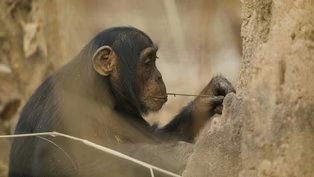
Preview of HumanLike: The Chimps of Fongoli
Video has Closed Captions
Preview: S45 Ep4 | 30s | The chimpanzees in Fongoli have adapted humanlike behaviors to survive their environment. (30s)
 New
Scientists Discover Chimpanzees Making Weapons
Video has Closed Captions
Clip: S45 Ep4 | 2m 7s | Wild chimpanzees are doing something once thought to be uniquely human: making weapons to hunt. (2m 7s)
Providing Support for PBS.org
Learn Moreabout PBS online sponsorship New Episode
- Science and Nature

Explore scientific discoveries on television's most acclaimed science documentary series.







 New Episode

Support for PBS provided by:
Major support for NATURE is provided by The Arnhold Family in memory of Henry and Clarisse Arnhold, Sue and Edgar Wachenheim III, Sarah and Sandra Lyu in memory of Seung...